


One of the more maddening aspects of product work are the situations that feel so convoluted — and also, somehow, inevitable — as to defy logic. It’s obvious that the work or the approach to doing it is misguided, untenable, or actively failing. But the team doesn’t seem to see it, nor are they acting on the situation.
There are four things to understand in order to start addressing this kind of situation. Broad at first, each of them work together to help define a very specific and local background to the problem: the places to play behind the situation.
- Initiative. What you're trying to get done and what you're doing about right now.
- Internal Potential. What's within reach, to use, influence, or depend on.
- External Opportunity. What's out of reach, but available to serve, observe, or engage with.
- Landscape. The forces at play that change and influence all of the above, regardless of your action or inaction.
Of these four things, the first three are local to each player in the situation. Any given person's perspective is shaped by where they are positioned inside the organization, and what is important for their success. The Landscape has a chance of being described 'objectively.' The rest, with effort, can become places of shared understanding (and should be, if they aren't already.)
The framework developed in the Loops and Cycles incarnation of this newsletter tries to build the above concerns into a guide for grappling with the challenges of product development. At the moment, I call it the Background Snapshot framework. I'm not yet sure if the acronym is apropos or unsuitable.
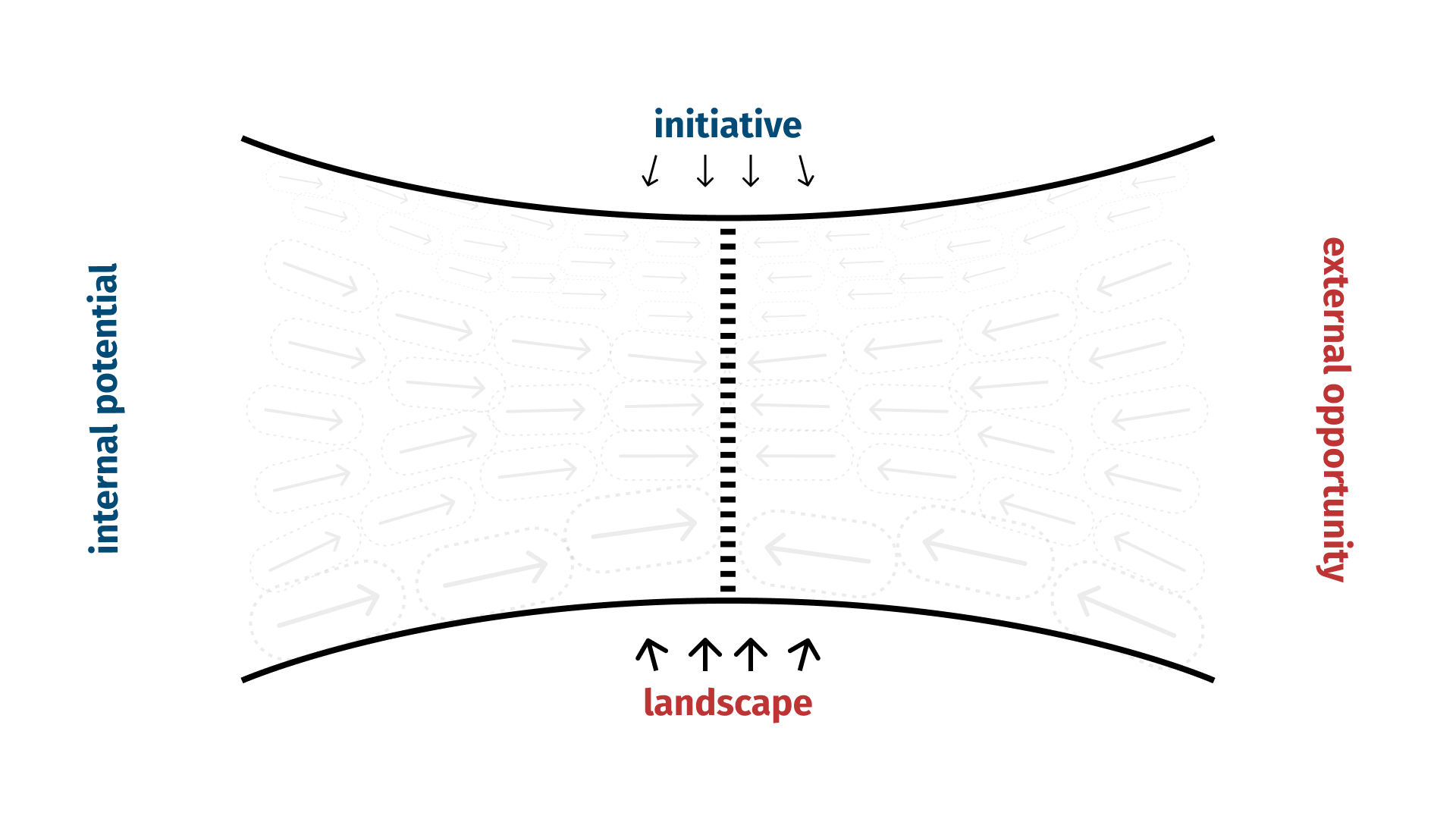
We can use a Background Snapshot to illuminate the structural weakness of different kinds of product challenge. I work from a rough typology of 'strategic challenge' based on a decade of in-house work, five years of consulting, and collected stories from leaders in product, research, design, and engineering.
The framing of each challenge type helps point toward a constructive approach for advancing the situation. They are, in simple form:
- Clarity and specificity. Almost every problem starts here until an effort is undertaken to make shared sense of it.
- Traction and motion. Sometimes the team is stuck, or work gets stalled out and stagnant.
- Alignment and direction. Other times, there is motion, but things are moving in unhelpful or even harmful directions. Or the work has no direction at all.
- Operational adaptation. Over time, ways of working calcify and stop serving the work. And new ways of working are mis-adopted or seem impenetrable to constructive experimentation.
- Anticipation and influence. Individually, and at team or program scale, the ability to act strategically entails a steady accumulation of anticipation and influence.
Not all problems or challenges in the organization will fall into one of these types — but most of the fun and interesting ones do. One discrete challenge may have aspects of multiple types, or change its primary type as you step the situation forward. We'll explore more of these as Playing the Background goes forward.
The idea underlying these problem types is that they are not problems that can be addressed directly. Rather than a heads-on assault against their symptoms, the place to play is the background structure of the situation, seeking and amplifying the moves that adapt the structures which allowed for problems to emerge in the first place.
All of this draws heavily on Christopher Alexander's 'Living Structure' theory of complexity in volumes I and II of his The Nature of Order. Going forward, we'll need his concept of 'centers' to underpin the notion of a background structure to the problem. Otherwise I'll try to keep the theory light, unless it's crucial to the conversation.
Other things of note
I took a late-March to early-May sabbatical to walk from San Sebastian to Santiago de Compostela along the Camino del Norte in Spain. About 850km on foot, it took 35 days of walking and 6 days of resting to complete it. (Two of my rest days were unplanned, the legs hurt and required rest. One must pay attention to the body.)
During that time, my friend Julian Della Mattia released his book Building the Research Engine. I contributed a guest essay about the PlanGrid days, on using a visual artifact as a tool for building shared understanding: exposing concerns for discussion without attacking individual perspectives. That skill is useful in all five types of strategic challenge above.
Until next time—
This is The Product Game, a newsletter for leaders in the product organization. Whenever you try to adapt or improve the situation, you're playing the product game.


