


I'm trying to get a handle on the hard and evergreen problems in product work — the ones that will always emerge and grow, so long as there is growth and change.
Last time I laid them out in a simple bulleted list, titled like this:
- Clarity and specificity
- Traction and motion
- Alignment and direction
- Operational adaptation
- Anticipation and influence
This kind of typology is helpful, perhaps, if you already know what the problem is lacking. The hard problems are hard because they defy simple attempts to to build clarity, or alignment, or change how things work, for example. But there's an unhelpful reduction here: the framing ignores the features of the problem that cause it to defy your efforts to build clarity and specificity, or whatever the situation requires.
A more interesting frame will help you see the type of problem in terms of what is concrete and present as you encounter it.
I'm working with "self-fulfilling projects" as a primary emblem for situations of the first type: ones that demand real clarity and specificity, but defy it. This one, like a self-fulfilling prophecy that causes itself to be true, is the project that causes itself to be important.
Rooted in a narrative about what is true, these projects feed on the strength of personal authority and protect themself self-sealing logic. The story need not be rooted in reality.
That the project itself is harmful is not always the case here. Sometimes they are successful, and create empty learning that will reinforce the same behavior. But when the project is harmful, challenging the narrative is extremely difficult. The higher the position of the primary sponsor, the harder it is to pierce the veil of the project and connect it to the current state of things.
Not incidentally, a major function of Wardley Mapping is to turn narrative into tangible and discussable assertion, something that can be challenged without challenging a leader's authority.
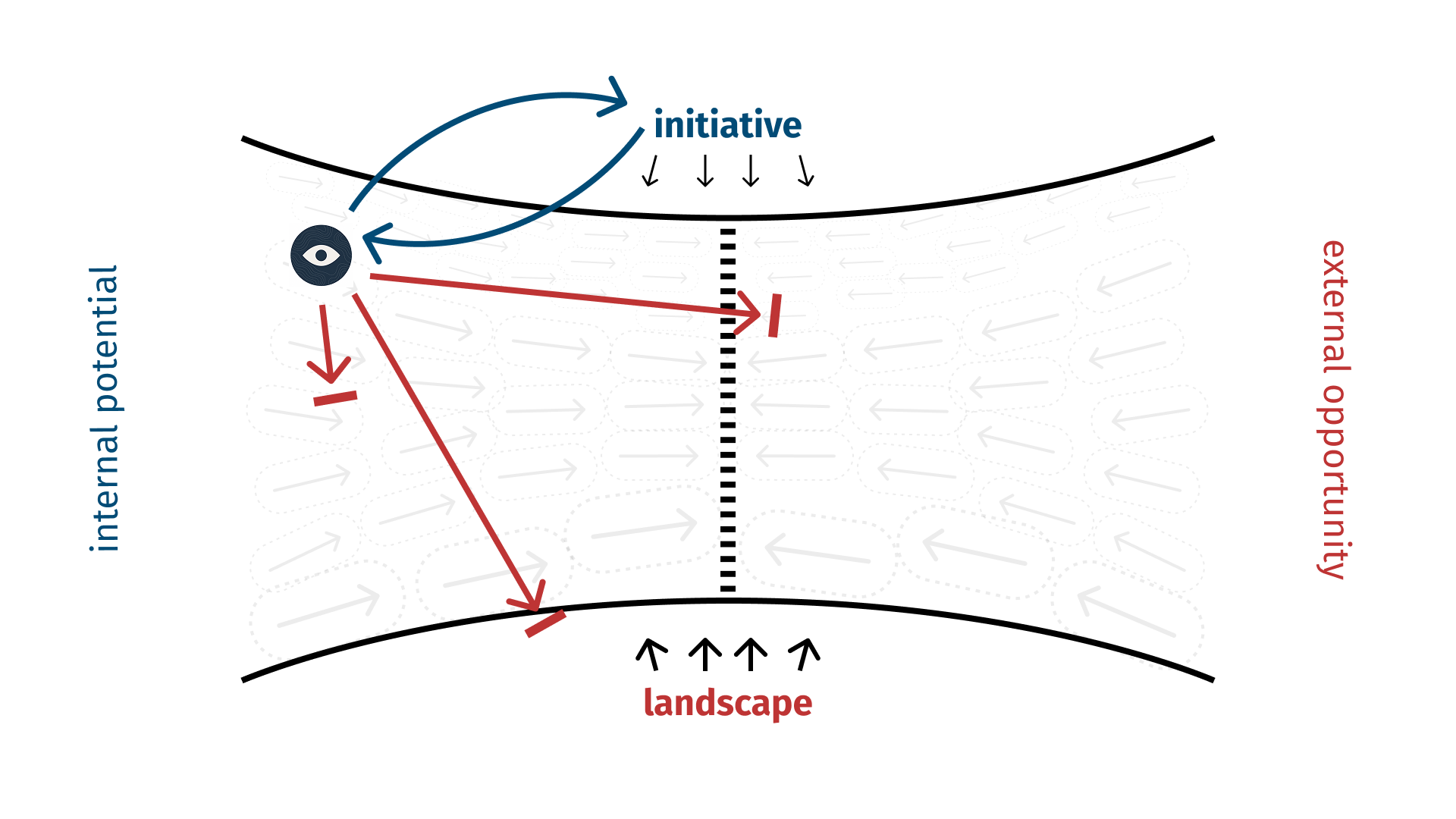
The self-fulfilling project primarily references itself and feeds off its own importance. It defies attachment to the existing structure of internal potential and external opportunity, replacing specific awareness with stories about what is there. It does the same for the forces at play in the landscape.
This kind of situation is inevitable. It arises because people see what they wish was there, rather than what’s really in play. Recall what Peter Korn said, in Why We Make Things and Why It Matters (goodreads link):
It would be impossible to overstate the degree to which each of us tailors our mental map to assemble a comforting picture. My saga of becoming a furniture maker was neither more nor less than an extended process of inventing narratives that would provide a sense of belonging, meaning, and so on.
Yet at the same time, those narratives had to be anchored in reality if I was to earn a satisfactory livelihood – which they never quite were.
I modeled myself on an ideal of the craftsman as a self-employed artisan, working alone, building furniture with integrity to his own technical and aesthetic standards, but I failed to stock my mental inventory with useful stories about how to conduct a business, how to market your work, how to build relationships with customers, how to work efficiently. For twelve years I painstakingly cut every mortise by hand with a mallet and chisels, and wondered why I couldn’t earn a decent living!
You can’t argue against a self-fulfilling project with outside facts, because it is not rooted in the background. It is a seductive narrative that changes shape in response to challenge. Holding on to the narrative is a means of reducing energy — it's easier to believe what one believes than to expend the energy to examine it.
Individually, you can Wardley Map the situation and recognize concrete problems. Or draw out a Background Snapshot. But a map won't serve you in a story fight until trust exists or you can speak to the situation in the language of the self-fulfilling project.
You have to accept it on its own terms first — temporarily suspend your disbelief, assume it is the right way to proceed — and rebuild a picture of the background structure from inside the logic of the story.
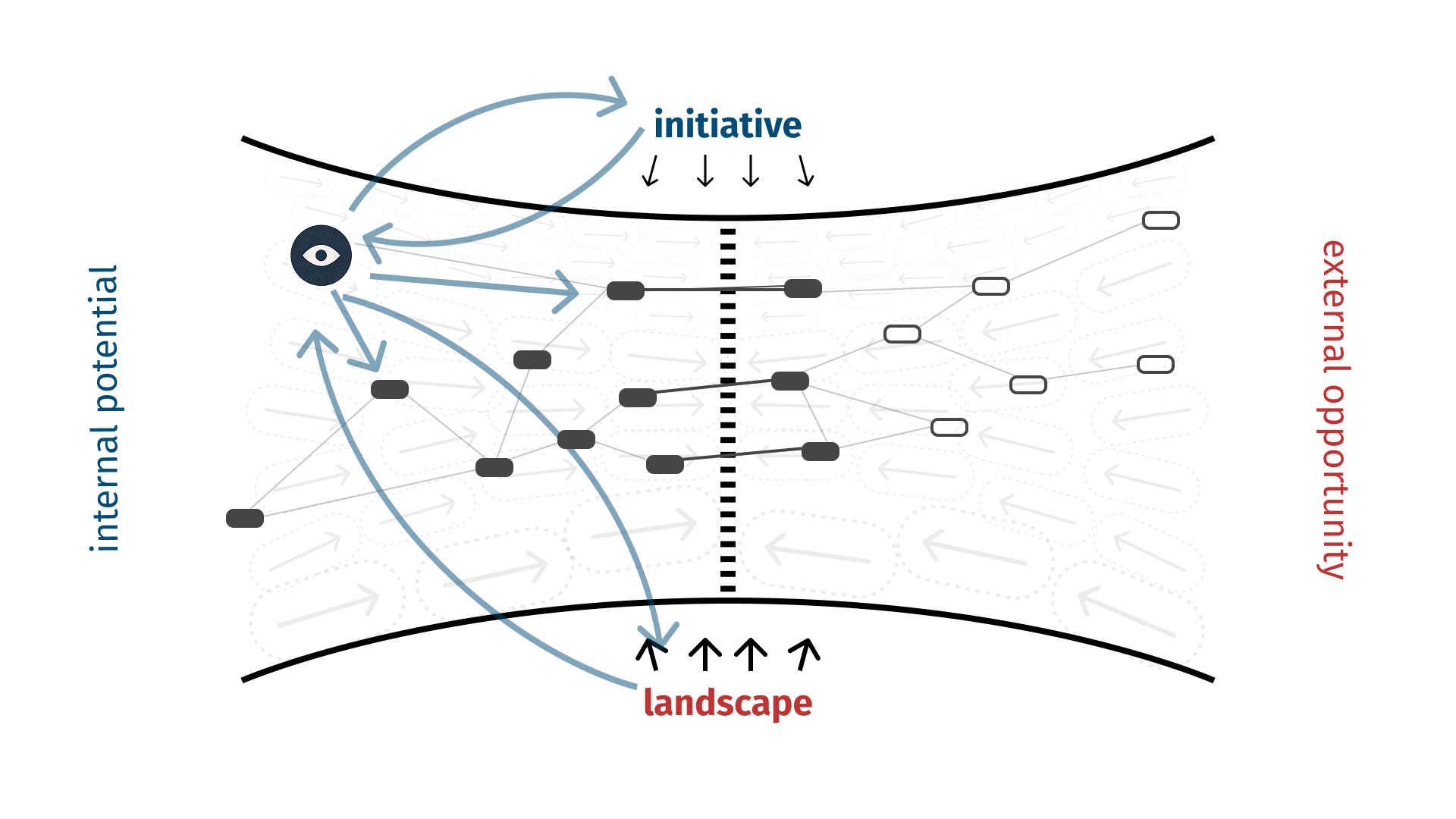
I spent a remarkable amount of time, energy, and relational capital grappling with these types of problems, early in my career, where my care for things to go right was much stronger than my sensibility for how to approach them.
If you are wrestling with this situation, exemplified by a self-fulfilling project, consider the approach. Are you arguing with the problem from an outside and rational perspective? Can you speak to the situation from the inside?
Other things of note
- It's not easy to understand how we got to now with the Middle East. I just finished Scott Anderson's Lawrence in Arabia (link to goodreads) and it's starting to frame that picture nicely — in a tale from 110 years ago. It's compelling, well-written, and Lawrence is a character I'd only known in passing, until now.
Until next time—
This is The Product Game, a newsletter for leaders in the product organization. Whenever you try to adapt or improve the situation, you're playing the product game.


