


When you approach a piece of product work, how do you tell if it's good? Better yet, since there will always be problems — how do you find where it needs the most work?
Evaluating client work-in-flight, I start with four criteria to sense where the problems may lie. Consider each piece of work as one move in the game you're looking at. A good move is:
- Bounded (last week): composed of a set of steps; has a clear endpoint.
- Grounded (this week): targets concrete relationships; carries a hypothesis.
- Constructive: useful in isolation from other games and moves; repairs weakness or creates strength on its own.
- Enabling: improves the wider field of play; anticipates adjacent games' moves or opens new possibility.
Dangerous Vehicles
Consider how the effort is packaged and discussed. The first red flag for an ungrounded move is in the language of the initiative: pay special attention to "MVP," "redesign," or — less common, but just as susceptible — the "v1" or "v2" effort. These are dangerous vehicles for product work: they allow it to quickly advance onto unstable ground.
They're not inherently bad moves; the danger is when the package serves as its own justification, and critical conversations and hypotheses about the move's context are deferred and dropped.
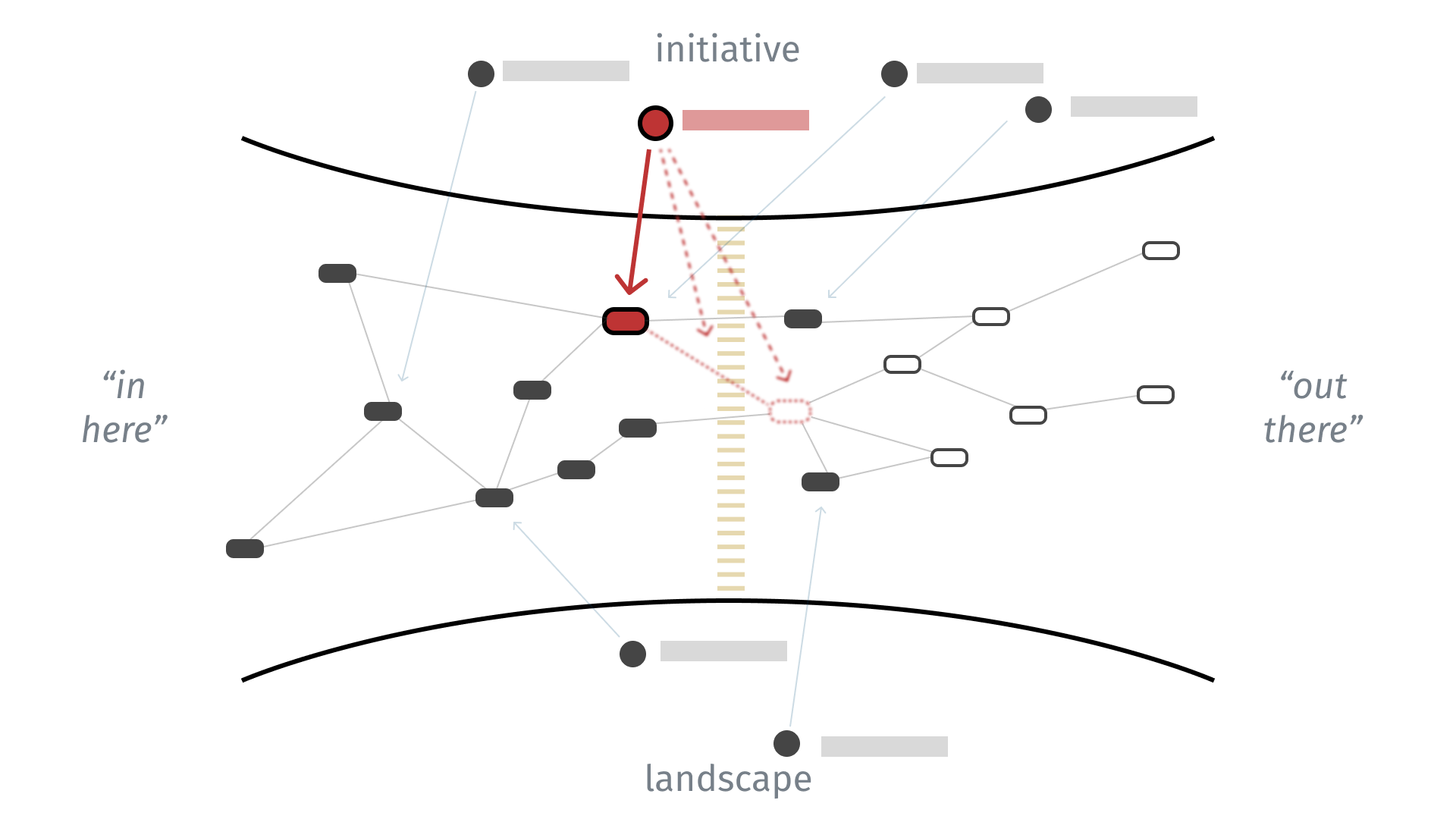
Good moves packaged as MVPs test a specific hypothesis about what is viable for a specific kind of user need or class of activities. Good redesigns prioritize specific external activity or internal activities that can be accomplished.
It does not take much work to find where these efforts are ungrounded. Simple contextual questions with a few layers of 'why?' will reveal whether or not the move is grounded in concrete specifics.
- Who is it for?
- What are they doing right now?
- What will change once you've made the move?
- What will they do differently?
- How will you find out?
- Why is this the best move?
A Concrete Relationship
A grounded move in product work doesn't target one place or one thing. It targets a relationship that crosses the internal/external divide.
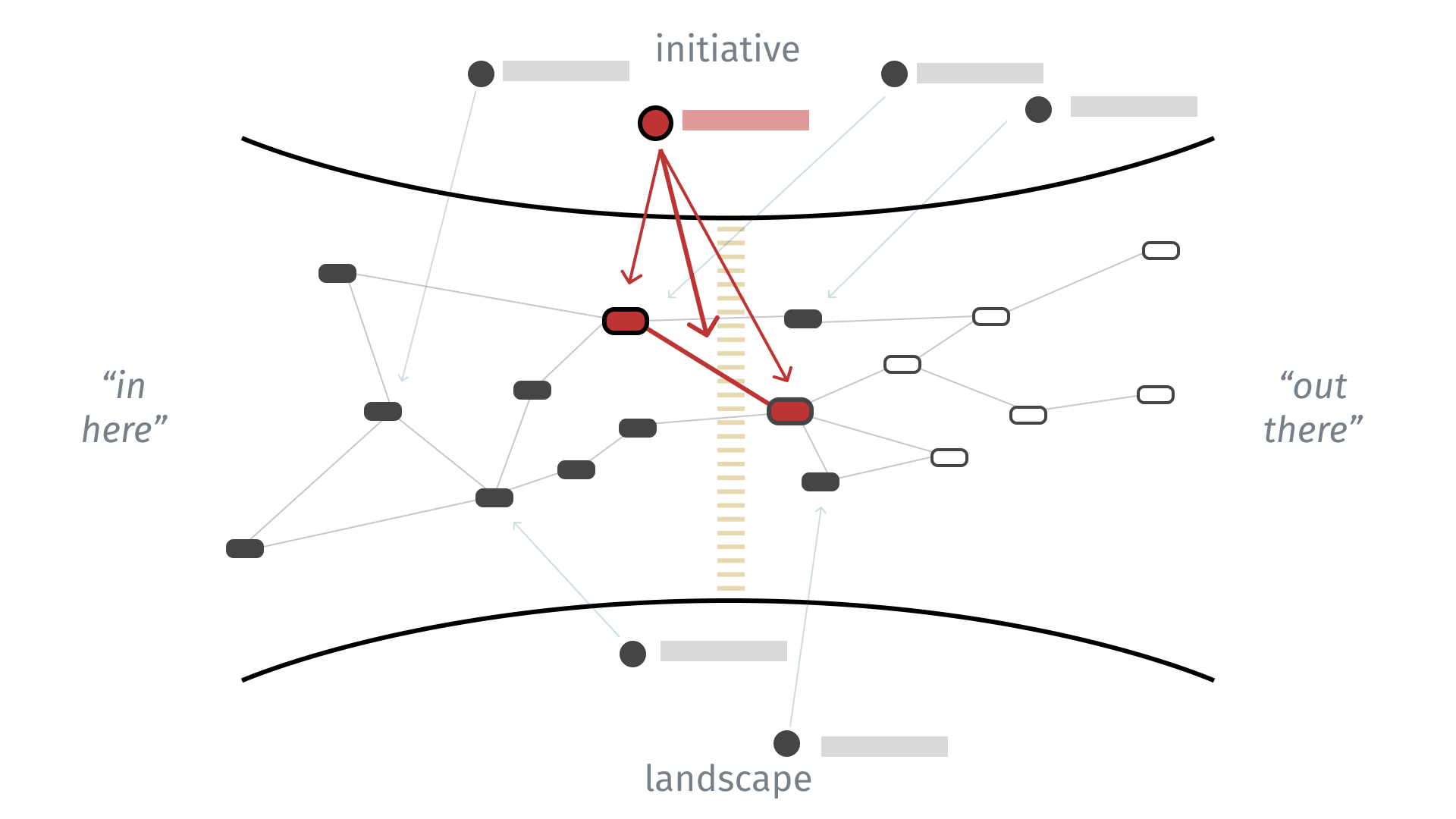
There is a paradox of size: the larger the move, the less scrutiny it will face in terms of the concrete internal/external relationships it's adapting. Sometimes larger moves are good and they are the right ones: that size should be defensible in terms of patterns of relationships that must be acted on in whole, rather than part. More often, though, large pieces of product work are an agglomeration of ungrounded enthusiasm wrapping a smaller, well-grounded core that ought to be played in isolation. The larger the move — the heavier the impact of waste — the more important it is that the move is well-grounded.
When a move is grounded, the team can articulate what will be different from the perspective of external play, and why they believe that is desirable. When a move is not grounded, language that touches the external is abstract enough to be severed from the work in flight: the relationship is missing.
Getting Grounded
A grounded move does not require concrete or specific knowledge about the external center it is targeting. It's fine for the team to recognize that there is a concrete role or user or pattern of action out there, to hypothesize the relationship, and make a move to learn how that relationship works. In this case, you can ask whether the delivery of an unspecific MVP or ungrounded redesign is really the best vehicle for learning.
More common though — where frustration, stagnation, and wasted work enter the game — is when the team uses internal focus and self-justifying language to drive an internal change without connection to external ground. It feels solid, and implied purposiveness of an 'MVP' or 'redesign' vehicle can contribute the illusion. There are many avenues of repair — a smaller probe, a learning spike, expert input, landscape mapping, for example. Follow the basic questions; once you see that the move is ungrounded, its weakness will suggest the point of repair.
Then, take the wide angle view. Existing momentum, prior commitments, executive expectations, and the constantly looming sword of layoff rounds all induce teams to continue forth onto unstable ground, rather than to pause and see where their feet are falling. These concrete forces are easier to confront when you have a handle on the current gameplay. You gain leverage for higher order play if you can demonstrate potential engineering waste, show a cleaner bet, highlight concrete and addressable user needs, or sketch a move that aligns with strategic priorities.
Other things of note
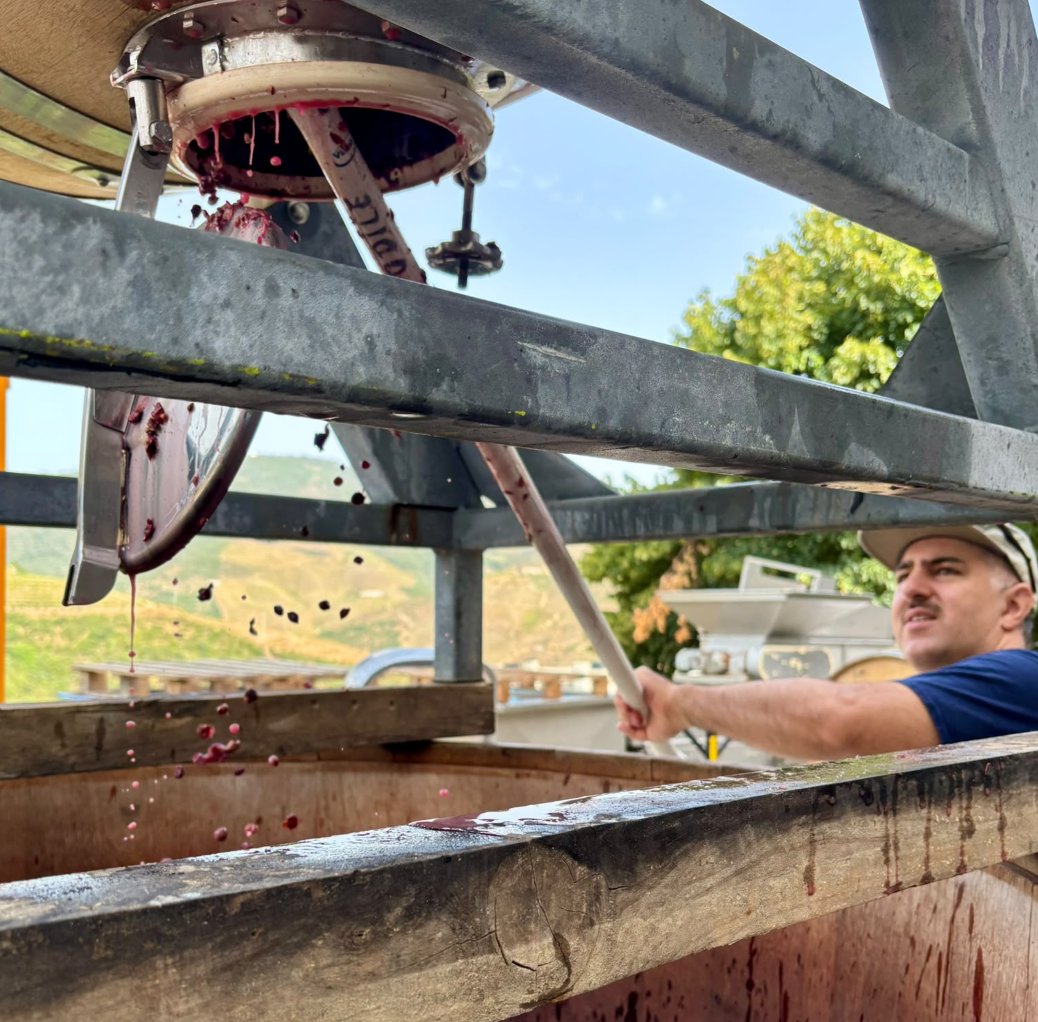
- I went to see a friend in the Douro Valley this weekend and help with her first press of the season. The wine is a bastardo, the Portuguese name for the grape more commonly known as trousseau. I love trousseau from the cool-climate Jura region in France. The Douro is not cool: it's a hot place with xisto soils instead of calcareous marne, so this wine will express quite differently. We'll find out just how in another year or so.
Until next time,
This is Dave's Monday newsletter for leaders in the product org: make good moves, play well with others, change how the game is played.


