


When you’re working in difficult product situations, there are three kinds of structure to explore and three relationships to triage that will help you advance the situation. Consider each situation ‘a game’ in its own right — in any organization there are many ongoing, interlocking, and overlapping games. You learn to manage them first by working with specific, individual examples of them.
This week, we scan the major points of entry into the game. Read what follows with respect to the most difficult or challenging situation you’re working with at the moment. I describe an initial approach that can be applied to any kind of strategic product situation, but must be applied to a specific situation to bear fruit.
Three Kinds of Structure
To enter the game means to get a hold of the situation you’re trying to improve or advance, and that begins by understanding the state of the structure in play.
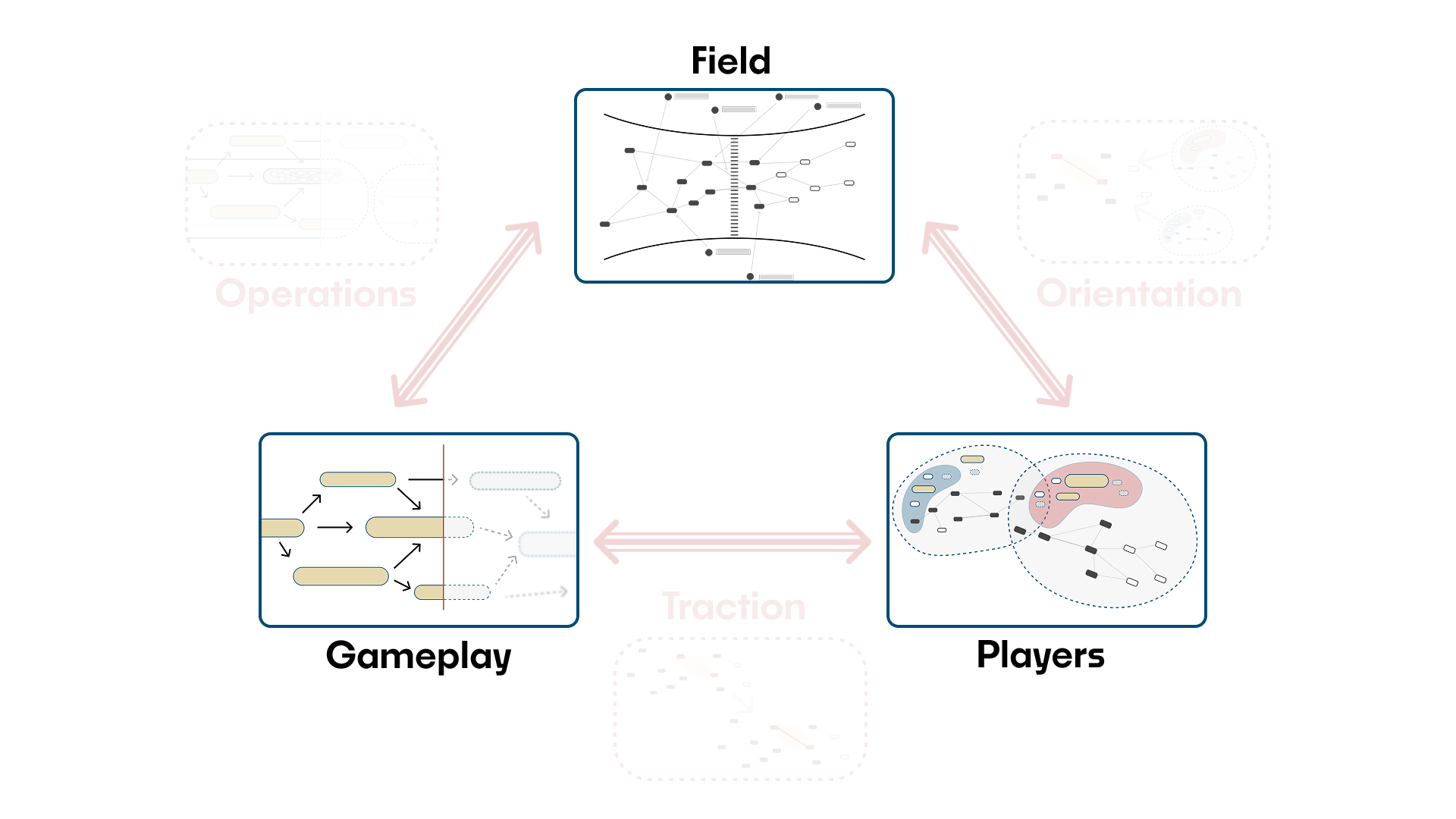
There is always already structure in place, in every strategic product situation. Moves have been and are being made; users are attempting to make progress in this area or they prioritize something else; the product supports certain patterns of action, perhaps well or perhaps poorly; people involved have preconceived notions about the situation and competing incentives given all the other games they’re involved in.
Start by considering three kinds of structure:
- The Field is the set of elements and relationships, from inside the team to the outside world, that defines the core of a product situation. The field is a structure that advances and evolves due to internal and external play. The core of product work is the coupling of internal and external structure. This is especially important with respect to external activities: there’s no blank slate, inside or outside, and what is unseen is unavailable for play.
- Gameplay is the set of moves being played and considered in this situation, and the sequence they unfold in. Gameplay is how internal action advances the state of the field, one move at a time. The ability to play legible and well-formed moves in sequence is the precursor to strategy. The team must be capable of advancing the field, step-by-step, to move towards any desirable direction.
- Players are the people invested and involved in this game, each defined by their position, each responding sensibly to where they stand right now. Everyone plays on the same field, though no two see the same game. This reality is critical to strategic work: through understanding others’ position and motives you create new handles for action; by ignoring them, you prolong frustration and incoherence.
Where the structure in place is not clear, your first move is simply building awareness, first, for yourself, and then progressively for the team. Sometimes this works akin to a consulting project diagnostic phase, a measured and sequential means of answering “what the hell’s really going on here?” Other times, it is only by acting and intervening that the game will reveal itself.
Whatever the case, where teams make poor assumptions about the structure in place (or worse, disregard its existence) they create mistakes, increase strategic debt, and remove downstream optionality.
Three Binding Relationships
In more experienced product organizations, existing structure is understood well enough, though awareness may not be shared or kept current with the advancing state of the game. The more pernicious problems that emerge lie in the relationships between the three different kinds of structure.
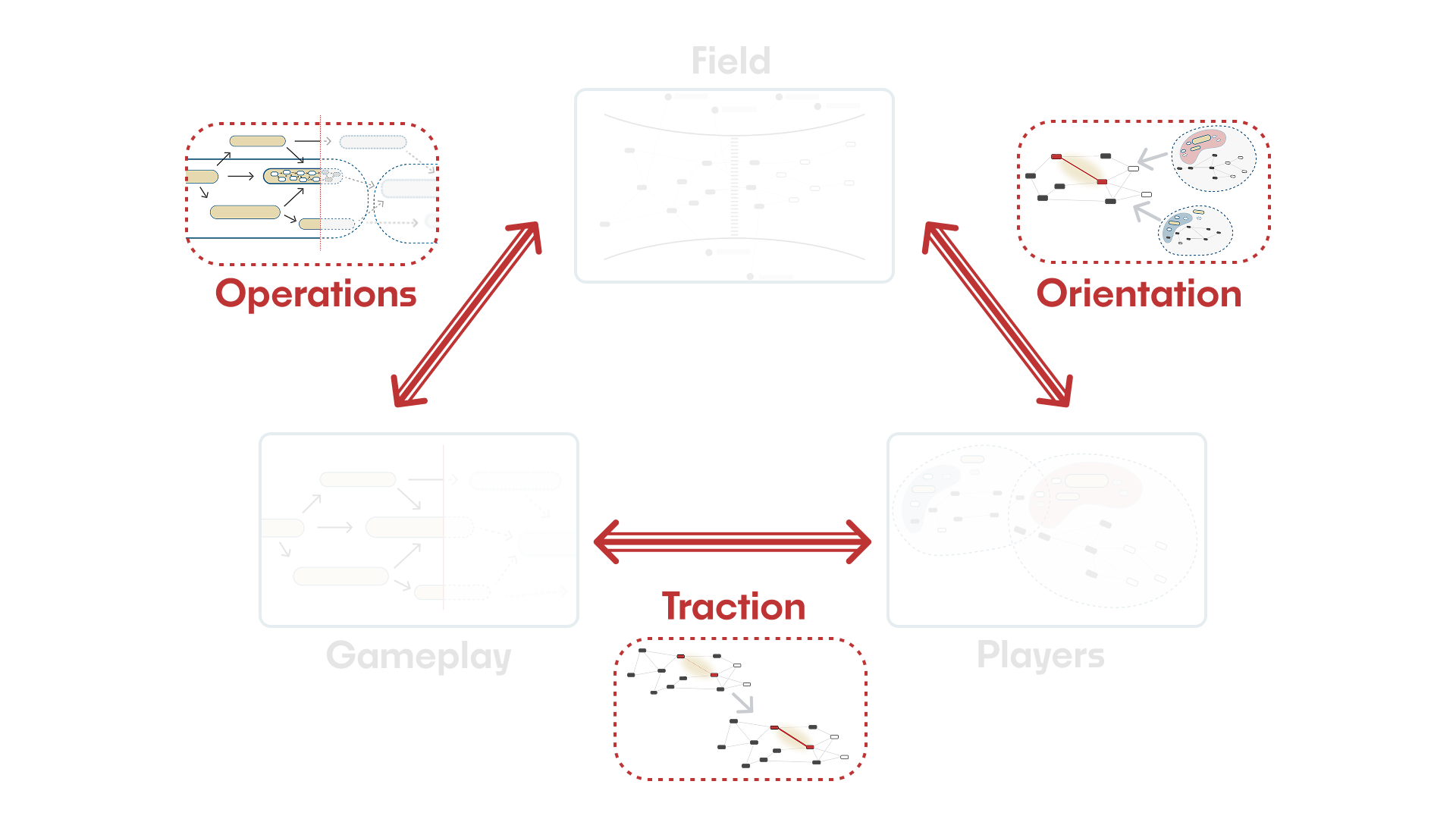
There’s always already structure in place to assess. Make a figure-ground reversal and you’ll also find that there are always already relationships in-place between them. Outside of pure user research (lack of sight into the playing field), most of the work I encounter in consulting lives within these relationships. And they break down in predictable ways — most often a form of self-sealingness that prevents an honest accounting of the situation.
Triage each of the different relationships when you have a baseline view of the two kinds of structure they connect:
- Operations (Field × Gameplay) is the fit between what the playing field needs to advance and how gameplay is formed and coordinated — within one game and across others. It touches delivery methods, rituals, operating cycles.
- The most predictable kind of breakdown is an Autoimmune Response. The context of the game changes, but play still operates as if it had not. Existing means of gameplay are understood and cost less energy. Where the changing context of the playing field is not recognized, novel methods that are better suited for the state of the game will be discouraged or actively attacked.
- Coordinate gameplay across timescales and shape work according to its domain.
- Orientation (Players × Field) is the quality of shared focus and language for players to communicate about the field. Strategic direction is a function of collective orientation.
- The most predictable kind of breakdown is the Death-Grip of Success. As the game advances, new areas of the playing field open up: adjacent areas of play become critical, previously critical activities with active and growing investment stabilize. Where teams don’t understand or focus on the changes in the playing field, they will continue to invest where it makes sense to invest — even as it becomes counterproductive.
- Situational models and space for sparring offer the arena for productive conflict that generates directional alignment.
- Traction (Players × Gameplay) is the ability to shape play that exposes new information and optionality. It drives intent behind each move and interpretation of the field’s response.
- The most predictable kind of breakdown is the Treadmill of Stagnation. Teams are building and delivering, yet the situation never seems to advance. Especially where activity with certain methods or technologies is prioritized over targeted advancements in the game, development becomes scattered, incoherent, or poorly sequenced.
- Help teams re-shape good gameplay — grounded, bounded, constructive, and enabling moves — to signals and learning that create opportunities for advancement.
I said last that last week, strategic work is maintaining the balance between all of these structures and relationships. Depending on how you enter the situation, as a leader, a contributor, or a consultant, your approach will look quite different, and the sequence you move through will be situational... but the structure you need to get a handle on and the relationships you’ll shape to get things moving remain the same.
Other things of note
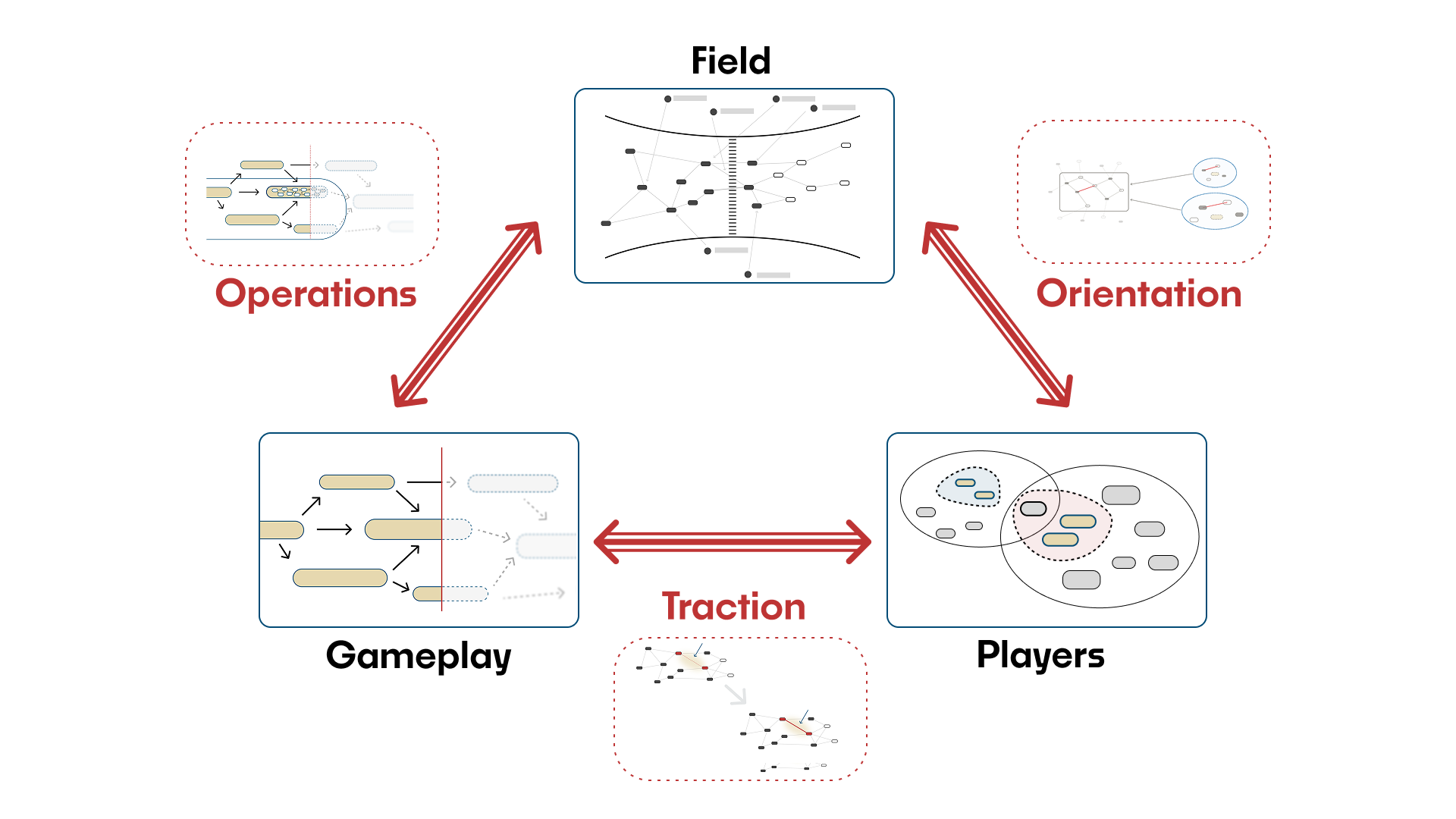
- This is a condensed, high-level view of everything we’ve discussed on the Product Game so far. If you’ve been following along, one term has changed: our primary handle for the product elements in play and the relationships between them is the ‘Field,’ as in “playing field,” and I’m now reserving ‘Game’ for the top-level notion of all three kind of structure and all three relationships that make up the situation you’re working with.
- The view is fractal. These three kinds of structure and the three relationships that bind them together exist in product work at every level of scale. You build strategic sensibility by improving different situations in different areas and at different levels of scale. Then you start to see the critical threads that bind them: the ones that product planning processes, org charts, and cascading OKRs tend to obscure or sever, rather than illuminate.
Until next time,
This is Dave's strategy newsletter for people building product. See the game and shape better moves.


