


Since the prior season of newsletter ended with Seeding a Product Framework, we have been exploring the space behind my framework for product strategy, shown above. We've meandered through its trees — moves and timescales and self-sealingness and sparring — and I haven't entirely articulated why we need the forest.
The impetus has always been inscrutable play. In the course of leading people and work, you will find that people do perplexing things, self-defeating things, and occasionally, as one friend put it, things that feel "indistinguishable from sabotage." I'll roll all of these things up under the banner of product strategy problems: to be glib, if your product strategy was effective, then those kinds of things wouldn't be a problem. The more nuanced take is that these kinds of things are inevitable, can be anticipated, and must be continual targets of repair, if effective product strategy is to take hold. That nuance is where this project begins, and why we are exploring the product game. Product strategy problems are the gameplay problems that didn't get repaired in time.
1. Organization as Games
Our existing understanding of product teams and strategy tends toward hierarchical, static, and improperly prescriptive. We add layers and bolt on methods and technologies, but how do you create better decisions and improve strategic direction?
In dealing with complexity, what works is ratcheting down the granularity until you create strength and coherence in one local place. Then you have something worth scaling outward. We handle that complexity view by seeing the organization as a field of nested, overlapping, and interacting games that continuously shape one another.
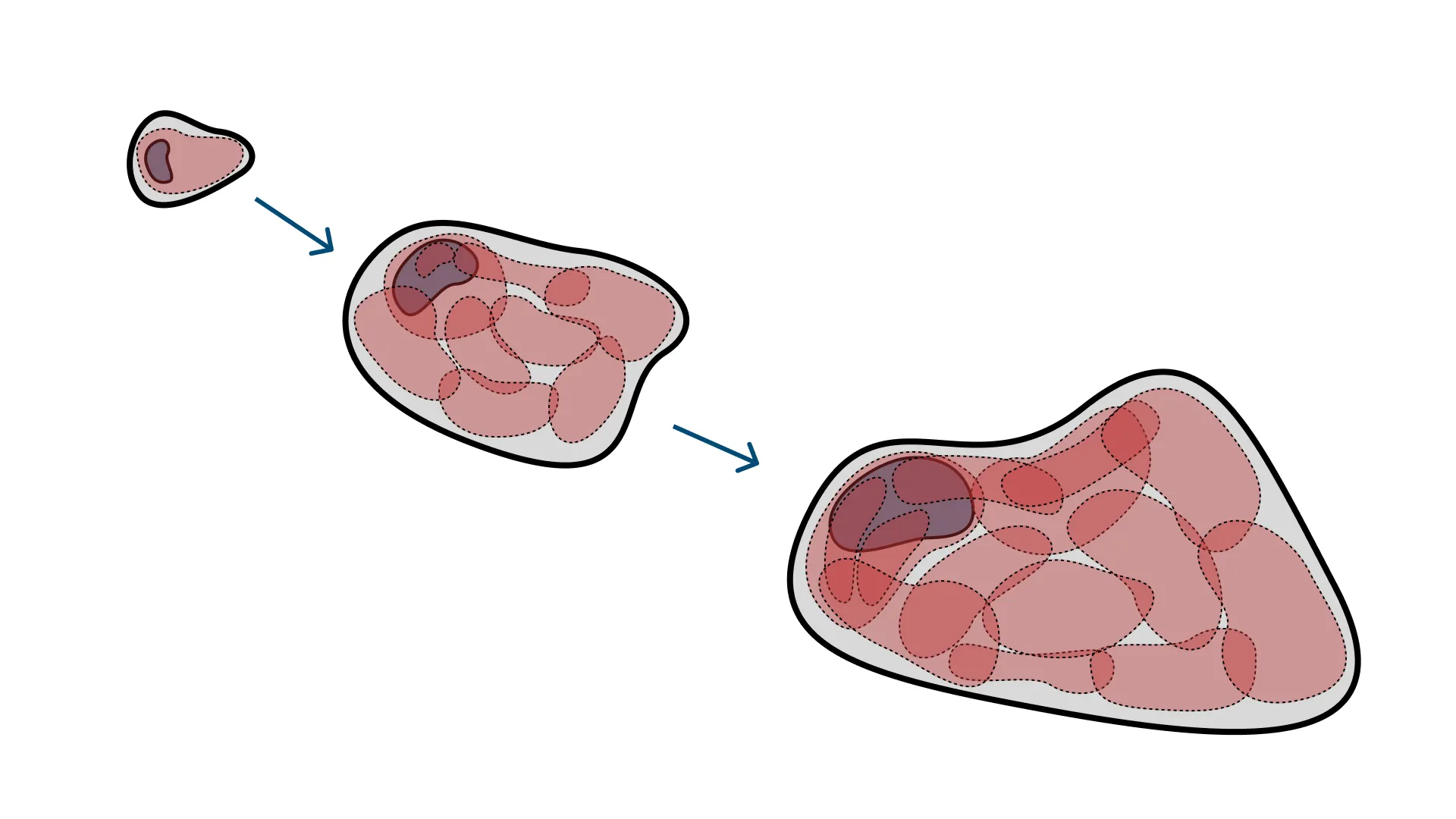
Strategic drift, directional conflict, and decay of intent are inevitable consequences of the organization's growth and motion. Many of these situations self-correct, others require attention and active repair before their damage radiates ever-further outward. Doubling down on priorities, reorganizing teams, or installing new development methods will certainly change the situation, though they rarely improve the underlying problem. Approaching these problems requires setting your sights on the concrete specifics of subgame, first.
2. Players Responding Optimally
The interaction, evolution, and diffusion of competing games allow for product strategy problems to take hold. If your players had the time to understand each game deeply and consider it carefully, in isolation and compared to every other, they could make better choices — but they wouldn't have any time left to actually play the game. What appears perplexing from your outside perspective is due to a simple truth: players are responding optimally to the mesh of games they're involved in, and the incentives and motivations those games provide.
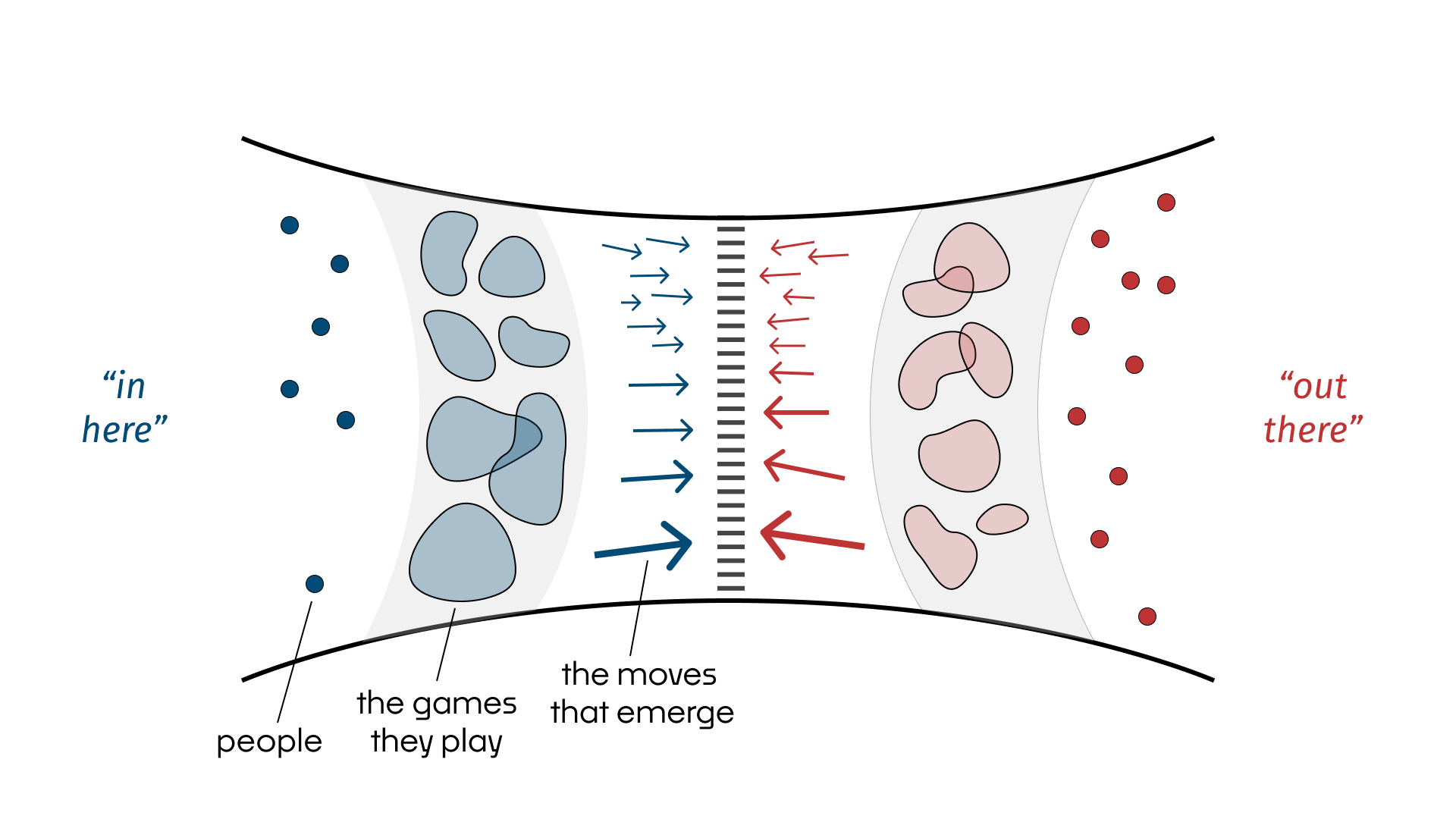
Each player, through each game, interprets the playing field differently. Within any any of these games, the options they see as available depend on their role, the games they engage with, and their personal history and experience with different kinds of subgame. The classic mistake is to try and change other players' actions, rather than approaching the games that shape those actions. To change behavior, you change a player's interpretation of the field from inside the game. That may mean reframing its internal context or its external reality. If you assume that players are responding optimally to the games they're involved in, you can assume they will continue to do so. Players will update their play as their understanding of a critical game is updated.
3. Coherent Strategy Emerges from Gameplay
To solve product strategy problems, you repair the play within one specific game. That gameplay is also where you find strategic coherence, and is why you focus on gameplay before strategy. A high-level strategy is a distraction at best, and self-harming at worst, when it is applied to games with poor gameplay. That problem is amplified in uncertainty: it's only through successful small-scale steps that you can understand the larger possibilities.
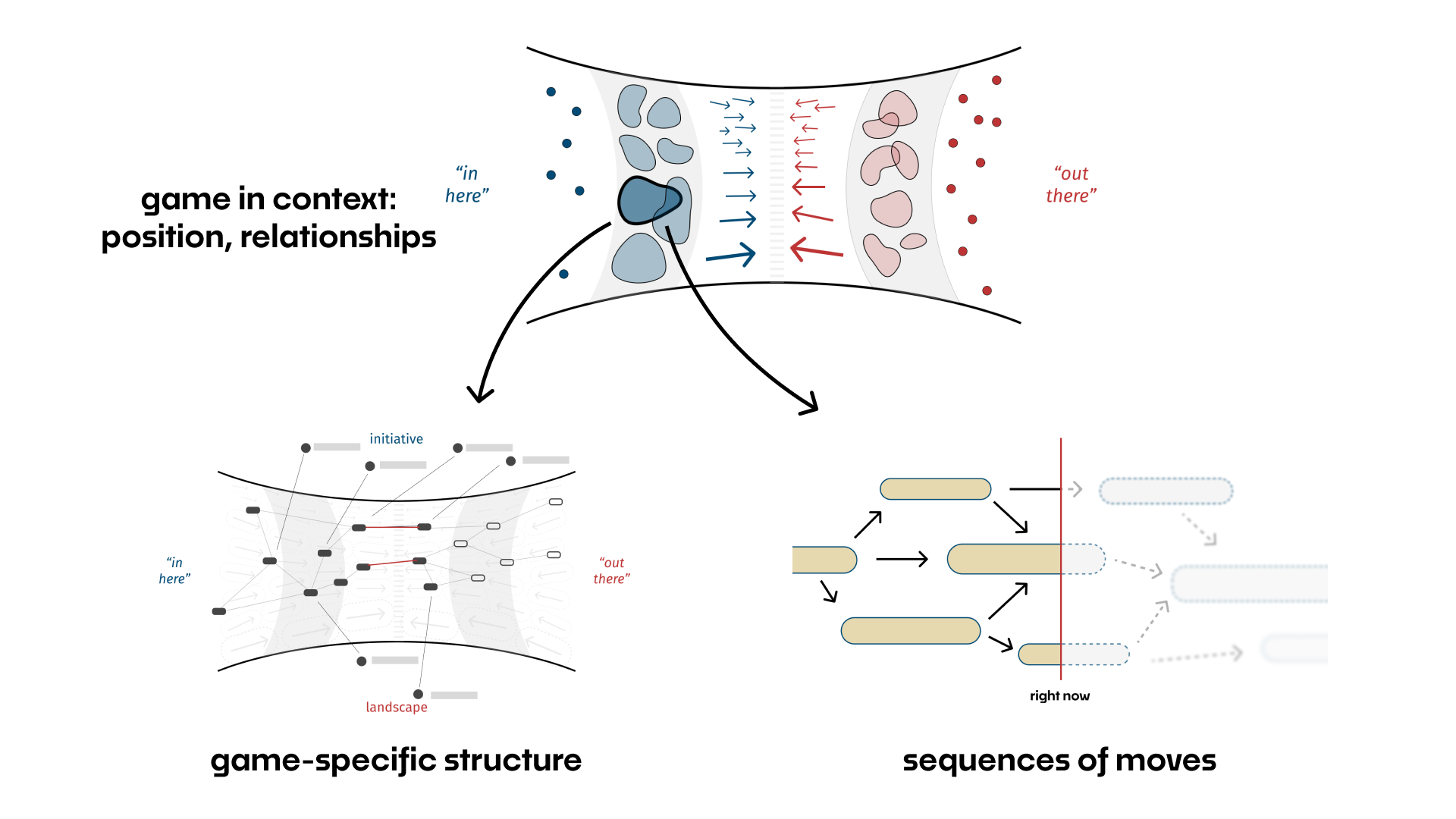
Strong gameplay depends on two things: a reliable view of the playing field and a healthy sequence of moves. Good gameplay creates traction: moves are well-formed with a clear hypothesis, and, successful or not, they generate signals that improve players' understanding of the field, increasing the quality of subsequent moves. Enabling a healthy sequence of play — past, present, and future — is just as important as a clear view of the playing field. Some moves will create better possibilities, other moves amplify the likelihood of mistakes.
All of this is to say, if you are dealing with product strategy problems, you must build good gameplay within the game where the problem is presenting itself. Reformulating PRDs, shaping better plans, or changing methods of delivery only help if they are in service of specifically enabling a better move within that game. Depending on your position in the organization, you may not have the leverage to change gameplay. What leverage you do have is dependent on your ability to change others players' understanding of the game they're playing, and what constitutes a worthwhile move therein.
To follow on this theme, the plan for next week is to look at the key dynamics within one specific game you should be aware of, as depicted in the framework we opened with. And for the week after that, at the trajectory of play as it interacts with the half-life of plans and roadmaps.
Other things of note
- I remember some 25 years ago watching Iron Chef Japan with rapt attention, especially when the secret ingredient was whole seafood — not a staple of childhood cuisine in Ohio. During the show, a floor reporter would ask the iron chef or the challenger about what they were cooking, then interrupt ongoing commentary with a quick interjection that sounded like 'foo-cuisant!' to explain the action. For decades I thought that cuisant was a French culinary interjection somehow related to cuisine, and had no idea why the foo was involved, but I knew the 't' in cuisant was silent because it was French. This weekend I learned that the main commentator on Iron chef Japan was one Fukui Kenji, who, when addressed, would obviously be addressed as 'Fukui-san!'
- Welcome to October. Your faithful correspondent has, for the 73rd time, been recognized as the DRC Employee of the Month. The LinkedIn tagline has been updated appropriately.
Until next time,
This is Dave's Monday newsletter for leaders in the product org: make good moves, help others play, reshape the game.


